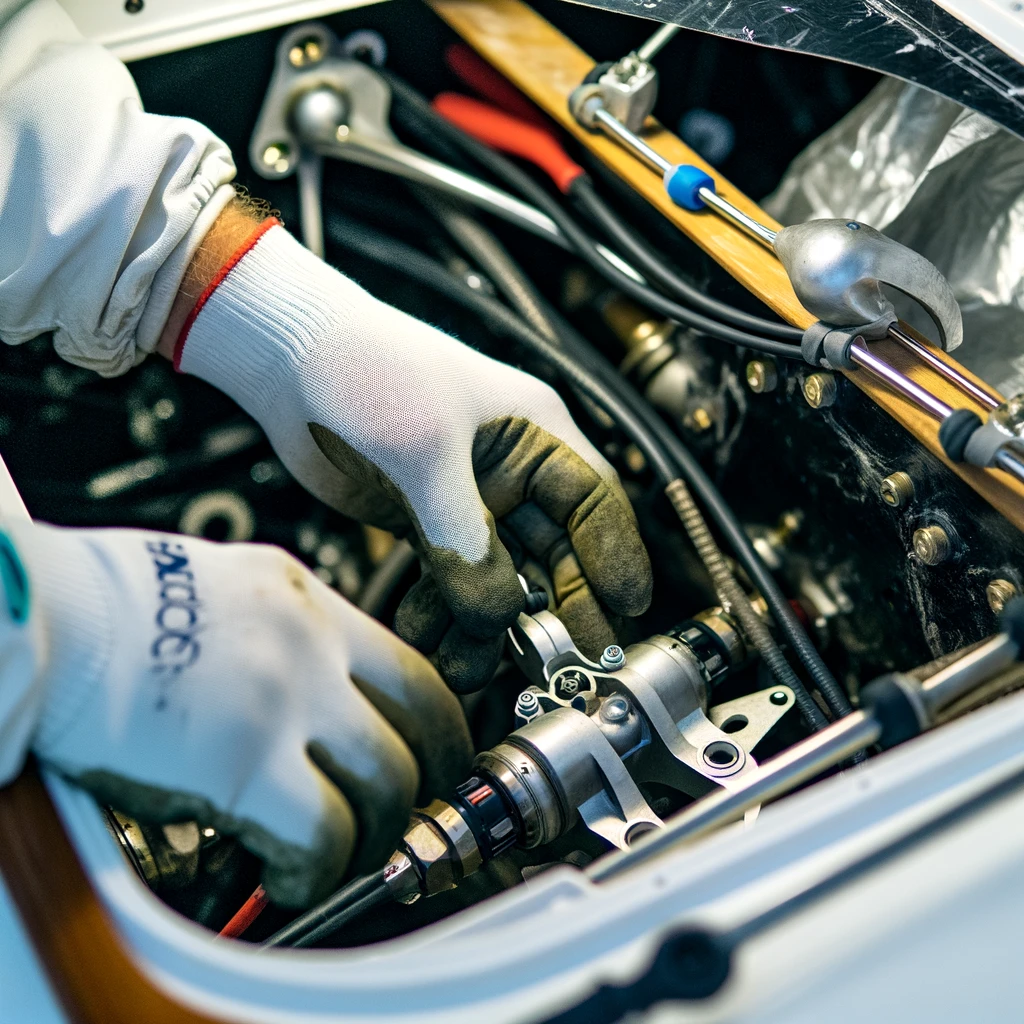
Rebuilding a hydraulic steering pump on a sailboat involves several intricate steps, requiring a good understanding of hydraulic systems and mechanical aptitude. Here’s a broad overview of how you might approach this task:
- Safety and Preparation: Ensure the sailboat is securely docked or on a stable platform. Gather all necessary tools, including wrenches, screwdrivers, seals and gasket kits specific to your pump model, and hydraulic fluid. Wear appropriate safety gear such as gloves and eye protection.
- Access and Removal: Locate the hydraulic steering pump, which is typically part of the steering assembly near the helm or steering wheel. You may need to remove panels or components to access the pump. Once accessible, carefully disconnect the hydraulic lines, taking care to capture any fluid that may spill. Remove any mounting hardware and then remove the pump from its housing.
- Disassembly: Place the pump on a clean, well-lit workbench. Take photos or make notes to document the assembly before you begin disassembly, which will aid in reassembly. Carefully disassemble the pump, keeping track of all parts and their orientation. Pay special attention to the condition of the seals, gaskets, and any moving parts like the rotor, vanes, or bearings.
- Inspection and Cleaning: Inspect all parts for wear, damage, or corrosion. Clean all components thoroughly with a suitable solvent and a soft brush, being careful not to damage any surfaces, especially those that are machined or polished.
- Replacement of Parts: Replace any worn or damaged parts, including all seals and gaskets, with new ones from the rebuild kit specific to your pump model. It’s generally advisable to replace these components even if they appear to be in good condition, as they are critical for maintaining a leak-free system.
- Reassembly: Using your notes and photos as a guide, carefully reassemble the pump. Ensure all parts are correctly oriented and seated, and that all seals are lubricated with clean hydraulic fluid to facilitate assembly and ensure a good seal.
- Reinstallation: Once the pump is reassembled, reinstall it in its housing, ensuring it is securely mounted. Reconnect the hydraulic lines, ensuring all connections are tight and secure to prevent leaks.
- System Refill and Bleeding: Refill the hydraulic system with the appropriate type of hydraulic fluid specified for your system. You’ll need to bleed the system of air, which involves circulating fluid through the system while opening bleed valves at the highest points until only fluid, and no air, is expelled.
- Testing: Once the system is reassembled and bled, test the steering for proper operation. Check for smooth operation through the full range of motion, and inspect for leaks or any abnormal noises.
- Adjustments and Fine-Tuning: Depending on the system, you might need to make adjustments to the pressure settings or alignment to ensure optimal performance.
This process requires a detailed understanding of your specific hydraulic steering system, and it’s important to consult the manufacturer’s service manual or a professional if you’re unsure about any steps. Incorrectly rebuilding or reinstalling the pump could lead to steering failure, which is a significant safety hazard on the water.


 Words of a Watchman
Leave a comment