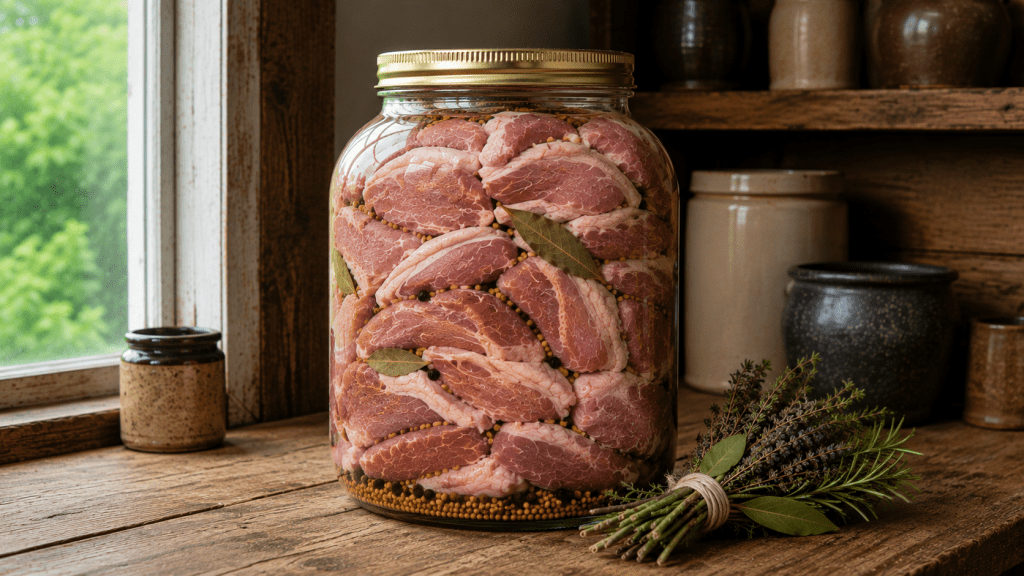
These were ubiquitous in the grocery stores when I was a kid, decades ago. Today, I ran a serious search, and could not find this product anywhere for sale in Ontario, not even in specialty European stores. So, the only option seems to be to make them yourself.
The first thing is to source the meat. A web search found several Toronto options, including a couple where it could verify that fresh pork hocks are actually listed, rather than merely guessing that a butcher might have them.
My first choice would be Coppa’s Fresh Market. Their current Toronto/GTA grocery listing specifically shows “Pork Hocks Ontario Fresh” at about $7.14/lb. It also lists fresh pork feet, incidentally.
Another definite source is The Butcher Shoppe, whose catalogue specifically lists “Pork Hock Fresh 3 lb.”
There are also some good options quite close by: The Friendly Butcher on Vaughan Road has a full-service pork counter, although I couldn’t verify hocks in its current online inventory. Likewise, Caprae & Suidae Butchery on Avenue Road is a full-service butcher accustomed to special cuts, so I’d expect them to be able to get you hocks even if they’re not sitting in the display case.
Another option is White House Meats, at 1523 Bayview Avenue in Leaside. Their pork selection specifically includes fresh pork hocks, as well as smoked hocks, so be sure to ask for the fresh, unsmoked ones. As an added bonus, they also carry English-style black pudding.
If frozen is acceptable, Graze & Gather explicitly lists Ron Hall Meats Fresh Pork Hocks (Frozen) and delivers throughout Toronto/GTA. Another Ontario seller, Heritage Meats, currently lists 4-lb lots of cut fresh pork hocks for $10 and delivers to the GTA.
For our pickled-hock recipe, I’d specifically ask for:
Fresh, uncured, unsmoked, skin-on pork hocks, preferably whole rather than cross-cut.
That last part matters. You want all that skin, tendon and connective tissue intact because that’s where your jelly will come from. And I think whole hocks would reproduce the old jarred product better than little saw-cut pieces.
I’d try Coppa’s first, since that’s the clearest verified retail listing I found.
Recipe
Old-Fashioned Pickled Pork Hocks in Jelly
A refrigerator-style recipe for tender, vinegary pork hocks set in their
own natural gelatin.
Ingredients
- 3 lb (1.4 kg) fresh pork hocks
- 3 cups (750 mL) water
- 3 cups (750 mL) white vinegar
- 2 medium onions, quartered
- 4 tsp kosher or pickling salt
- 1 tbsp sugar
- 2 bay leaves
- 6 whole cloves
- 1/2 tsp whole allspice
- 10 black peppercorns
Optional: Use smoked pork hocks instead of fresh hocks for a
saltier, slightly ham-like flavour that may be closer to some old
commercial versions.
Method
Remove the skin, debone the fresh hock, and separate the individual muscles by following the connective-tissue seams with your fingers and a knife as needed. Don’t trim away all the connective tissue or fat; leaving a little attached gives the pieces their characteristic irregular shape.
Then cure/brine the separated muscles with the appropriate measured curing salt, and cook them as intact pieces, as follows:
- Put the pork hocks in a heavy pot and add the water and vinegar.
- Bring just to a boil. Skim off any foam that rises to the surface.
- Add the onions, salt, sugar, bay leaves, cloves, allspice, and
peppercorns. - Cover and reduce the heat to a very gentle simmer.
- Cook for about 2 1/2 to 3 hours, until the meat is very tender
but has not completely fallen away from the bones. - Carefully lift the hocks from the pot.
- Strain the cooking liquid, discarding the onions and spices.
- Taste the liquid while it is still warm. Add a little more salt if
needed. For a sharper old-fashioned pickle flavour, add a splash
more vinegar. - Pack the hocks snugly into clean, wide-mouth jars or a glass
refrigerator container. - Pour the strained hot cooking liquid over the hocks until they are
submerged. - Cool, cover, and refrigerate until completely cold, preferably
overnight. The collagen from the hocks should cause the liquid to
set into a natural jelly. - For better pickle flavour, refrigerate for 24 to 48 hours before
eating.
Clarifying the Jelly
For a crystal-clear jelly, cook the pork very gently at a bare simmer, never a rolling boil, and skim off any foam that rises to the surface. Remove the cooked meat carefully and strain the cooking liquor through a fine sieve followed by damp cheesecloth, without pressing or squeezing.
Chill the strained liquor completely and remove the solidified fat from the surface. For an exceptionally clear jelly, clarify the cold, defatted stock with egg whites as for a consommé: whisk in the egg whites, heat slowly until they coagulate and collect the suspended particles, then strain the clarified liquid carefully through damp cheesecloth.
Add the vinegar and seasonings to the clarified stock, keeping whole spices and herbs in a bouquet garni or spice sachet so they can be removed before filling the jars. Test a small amount of the liquid in the refrigerator. If the natural gelatin is insufficient, add enough unflavoured gelatin to produce a soft, transparent aspic rather than a firm, rubbery gel.
Pack the cooked seam-separated pork pieces into the jar and cover completely with the warm clarified pickling liquid. Refrigerate the finished pork hocks unless following a tested pressure-canning recipe specifically intended for shelf-stable meat.
Serving
Serve cold, with the pork hocks surrounded by or lifted directly from
the jellied pickling liquid.
Food-Safety Note
This is a refrigerator preparation, not a shelf-stable home-canning
recipe. Keep it refrigerated at 4°C / 40°F or colder. Do not process
these jars using ordinary boiling-water canning.
Because this is not a laboratory-tested preservation formula, make small
batches and use conservative refrigerated storage practices.


Leave a Reply